

Fishing experts in consensus: Loophole used by migrant fishers must be replaced with fishing visa
January 21, 2026
In an event in Parliament, there was a clear case built for a UK fishing visa, to avoid growing misuse of a transit loophole
On January 20th, Focus on Labour Exploitation (FLEX) hosted an event in Parliament attended by MPs, Peers, regulators, producers, retailers, legal experts, academics, NGOs and more. Panellists and speakers included:
- Lord Watson of Invergowrie
- Alistair Carmichael MP, chair, EFRA Committee and Fishing APPG
- Eleonor Lyons, Independent Anti-Slavery Commissioner
- Elysia MacCaffery, CEO, Gangmasters and Labour Abuse Authority (GLAA)
- Shu Shin Luh, Barrister, Doughty Street Chambers, has represented migrant fishers in legal cases
- Baroness Frances O’Grady of Upper Holloway
- Lucila Granada, CEO, Focus on Labour Exploitation
- Kate Roberts, Head of Policy, Focus on Labour Exploitation
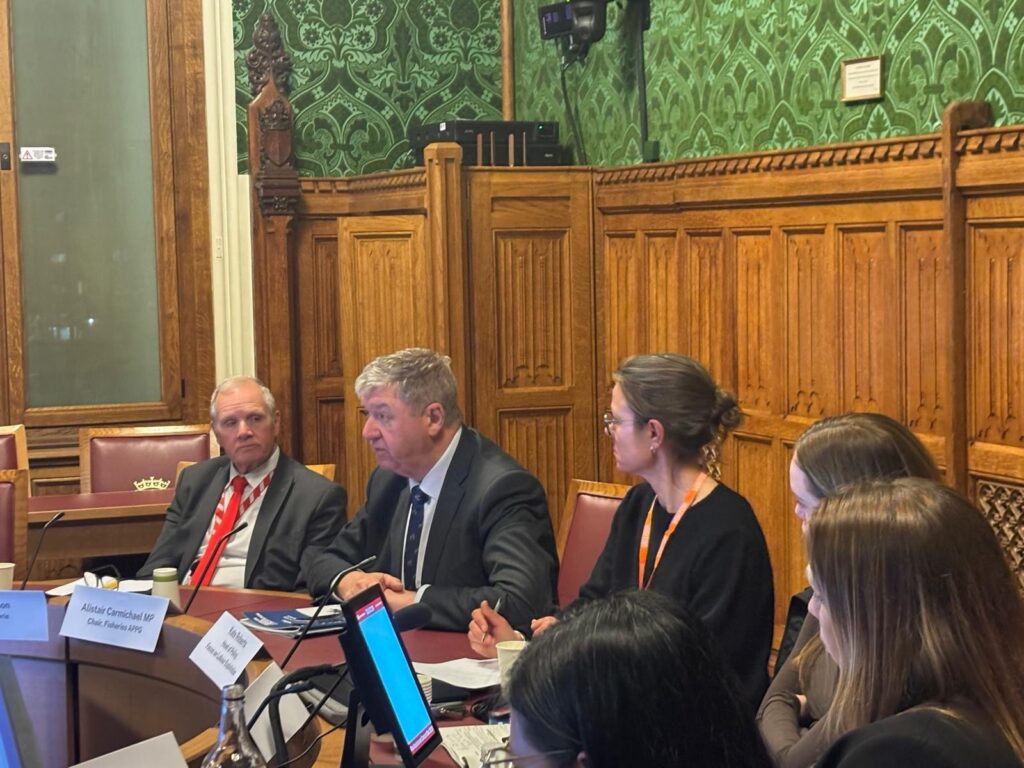
In it, FLEX launched “Unravelling The Nets: An examination of the seafarer visa policies and their impact on migrant fishers in the UK”. This novel report looks at the visa system used by migrant fishing workers in the UK, which receives little scrutiny. It draws out the dangerous dependencies built into the system, and highlights that risk is set to grow exponentially due to policy decisions being rolled out over 2026.
Most migrant fishers on UK vessels are on either Code 7 Transit Stamp or Skilled Worker Visas. The Code 7 Transit Stamp allows temporary entry for crew joining a vessel that will leave UK waters. It does not grant permission to work or reside in the UK, creating a huge grey area ripe for exploitation, without means for workers to raise concerns. On the other hand, the Skilled Worker visa is the only route allowing foreign nationals to work legally within UK territorial waters. Changes introduced in July 2025 raised eligibility thresholds for this visa, requiring earning over £40k and a high degree of proficiency in English. It is expected that further changes coming into effect in December 2026 will mean that migrant fishers will no longer be able to access the Skilled Worker Visa at all. Migrant fishers, and the fishing industry, will all rely on the Code 7 stamp, and the risks of exploitation that that entails.
In the discussion amongst these experts, there was a clear consensus established: we must learn the lessons of previous visa systems (such as for overseas domestic and seasonal agriculture workers) and implement the solutions we know would work. This includes a specific Fishing Visa which recognises fishers as workers and includes options to access rights and challenge exploitation in practice , and ensuring the upcoming Fair Work Agency looks at fishing as a priority for labour market enforcement.
Alistair Carmichael MP [he/him’, panellist and Chair of the EFRA Committee and Fishing APPG, said:
“Across the board, the food industry is crying out for labour that it is simply unable to get domestically. There’s been a long, slow burn of these industries being neglected and undermined. This will take a generation to turn around and until then migrant workers will remain a fact of fishing.
“But highly skilled migrant fishers doing dangerous work deserve a better deal, where their rights, dignity and safety are guaranteed by a better visa system.”
Eleonor Lyons [she/her], panellist and Independent Anti-Slavery Commissioner, said:
“The fishing industry is the backbone of many British coastal communities. As this report shows migrant workers are vital to the fishing industry and keeping boats at sea.
“Sadly, for workers being exploited the visa system is poorly designed and it is unclear where fishers can go for help if they need it.
“Similarly, across other sectors like social care, agriculture, and migrant domestic household workers, there is a reliance on short-term visas but badly designed structures make the risk of exploitation worse. Alongside a better visa, we need a system overall that workers can actually navigate in practice.”
Kate Roberts [she/her], chair of the panel and Head of Policy at FLEX, said:
“In December of this year, new rules coming into effect will make the skilled worker visa inaccessible for migrant fishers to work in the UK. This is a real concern: workers will be driven onto the transit route, criminalising them if they fish inside UK waters and removing practical options to challenge labour exploitation.
“The government must act swiftly to bring a fishing workers visa into effect, to formally recognise fishers as workers and help end the misuse and overreliance on a route that puts workers at high risk of labour exploitation.
“Any new visa must contain options, such as switching employers and renewal, to ensure all workers on the visa can access rights in practice and challenge exploitation. This is key to the government’s commitment to make work pay for all workers and ensure the provisions in the government’s flagship Employment Rights Bill apply to all workers.”
Kate Roberts is available for interview and further comment. Other comments may be requested. FLEX is happy to provide further background on the subject matter.